GS1 Sunrise 2027: One Code, Two Jobs - And Most Brands Are Only Building for One
Compliance gets the mandate. Marketing and sales never get looped in. Here's how to turn that requirement into first-party data, trust, and sales.
September 1, 2026
GS1 Sunrise 2027 is the retail industry’s deadline for every product to carry a scannable 2D barcode by January 2027, replacing the traditional UPC. Retailer checkout systems will scan that code the same way they’ve always scanned a barcode - as product identity. But the code itself can do a second job most brands aren’t building for or even thinking about.
Here’s what’s actually happening at most brands right now: packaging, compliance or supply chain gets the mandate, redesigns the packaging, checks the box. Marketing and sales aren’t brought in to help optimize the experience for their goals. Classic case of a decision that touches the whole business getting made by one team that only has to to think about half of the issue.

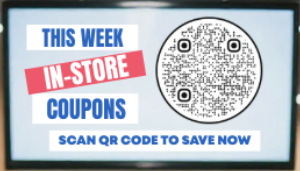
Don't link QR codes to your homepage
Linking a generated QR code that you create to your homepage creates a poor customer experience that lacks relevant and contextual information.
Read MoreWhat does Sunrise 2027 require?
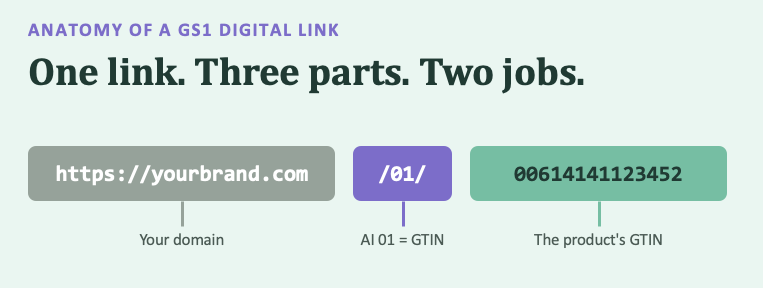
By January 2027, GS1 wants every product’s 2D barcode to carry its GTIN (Global Trade Item Number) so retailer point-of-sale systems can read it as product identity - the same job the UPC barcode has done since the 1970s, just in a format that can hold more data. Major retailers are moving toward accepting, and eventually requiring, this format at checkout.
Why a packaging compliance-only approach leaves value on the table
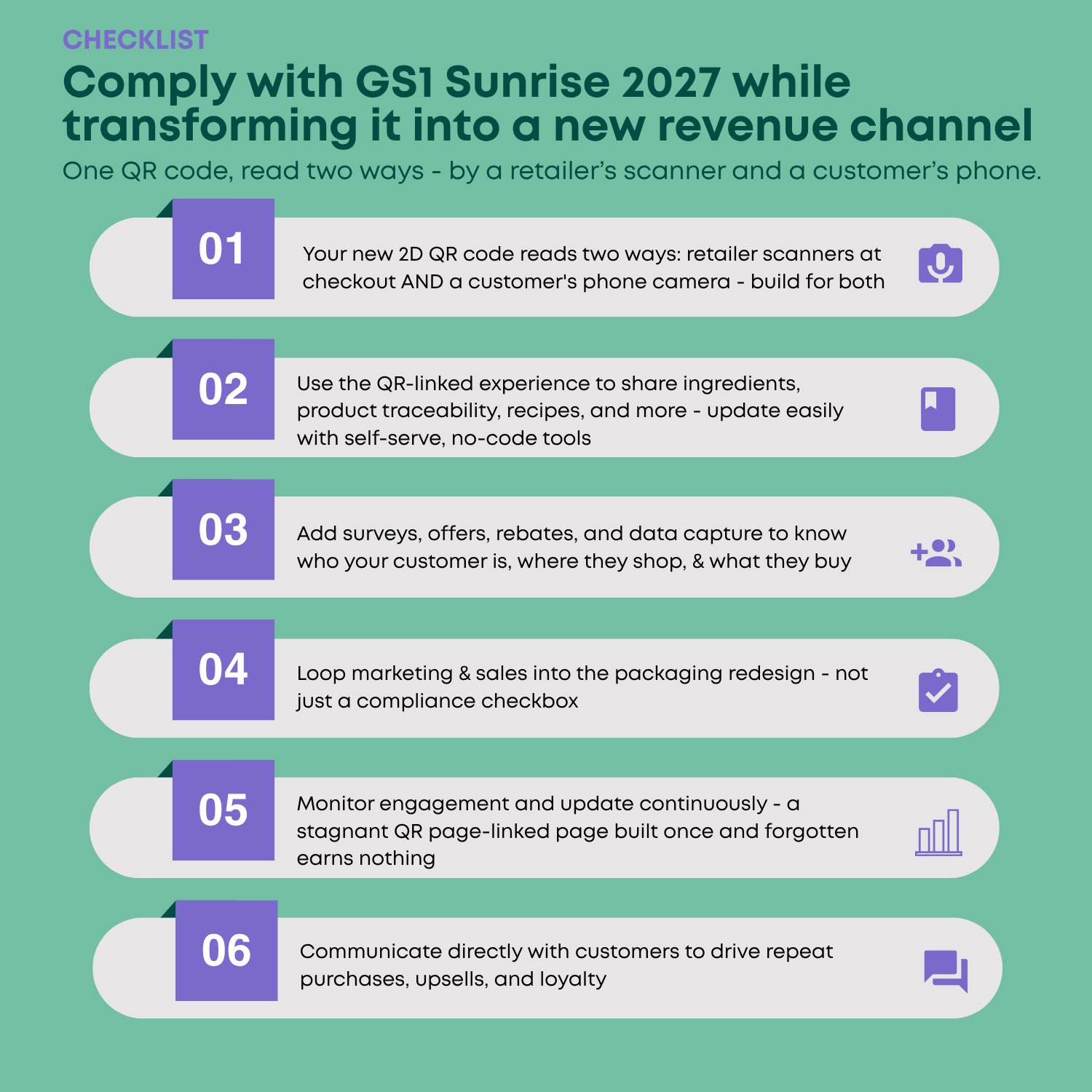
That same code gets read two ways. (1) A retailer’s scanner reads it at checkout. (2)A customer’s phone camera can read it anywhere else - on the shelf, on the couch, six months later digging through the pantry. Compliance solves for the retail experience, because that’s their remit and mandate. Nobody’s in the room to ask what about the second scanner, and what experience they should get. What is good for the customer and the company.
So the customer-facing side either doesn’t get built, or someone throws together a QR-to-webpage with ingredients and traceability information, ships it, and moves on. Nobody’s watching what happens after the scan. Nobody's thinking how this can benefit the company to maximize the direct engagement with the customer. Nobody’s asking whether it’s working. It just sits there. Maybe someone checks scans.
Functionally, that’s what most company's have already done with QR codes on packaging today. But now, you’ve spent real money and real packaging-redesign hours to end up exactly where you started - a barcode that does one job at checkout and really nothing else.
Why a scan alone isn’t a customer
A scan with the new 2D codes gets someone charged at the register. Maybe, if you’re lucky, a handful of people scan out of curiousity on top of that. That’s the ceiling - unless you give people an actual reason to pull out their phone.
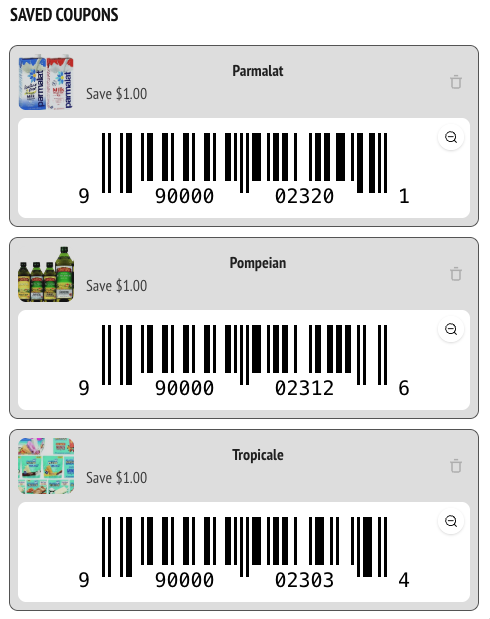
Nobody scans a code because they’re bored. They scan because there’s something on the other side worth having: a rebate, a chance to win, information they can’t already get by reading the box. We’ve watched this play out enough times, so we know - no value-based CTA, no scans. It’s not complicated, customers scan for value. They want to know they get something on the other side of the scan.
The moment that actually matters
The moment that matters is the second a customer picks up your package. They seen the code and are curious about what’s behind it. They're interested in the offer that’s on the other side. That’s someone leaning in. What happens next decides whether that curiosity becomes a relationship or dies on a static webpage that’s built once, and forgotten about.
That’s the job Digiphy does. We turn the GS1 code you’re already required to print into a channel that actually works for the business - dynamic, and easy to update yourself with our self-serve, no-code platform. Not just a compliance checkbox, but something that’s flexible enough to live in your actual marketing calendar and be part of your sales strategy.
A page that keeps working, not one that sits there
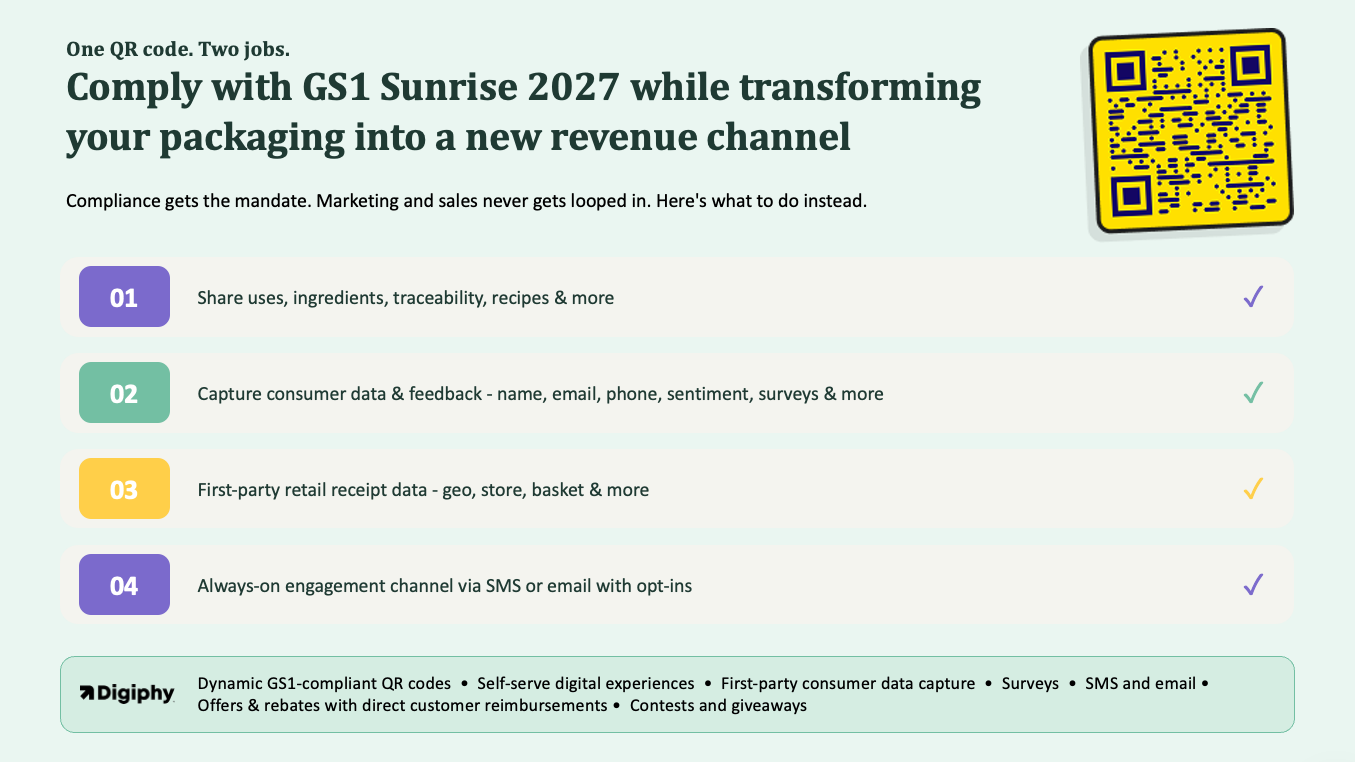
Ingredients and traceability still matter, and shoppers increasingly expect to find them - the mistake isn’t including that information, it’s stopping there. (We also help brands comply with newer vertical regulations like the American Beverage Association’s Good to Know and AB 899 for baby food.) Beyond that baseline: rotate seasonal offers, update recipes, promote new products, share rebates, run a contest or giveaway, ask a real question and read the answers. Get customers to opt-in, lean in and share their data. Upload a receipt in order to get money back.
An experience that changes gives people a real reason to scan again.
A real customer, not a guess
Someone scans, buys, and uploads a receipt to claim a rebate - and now you have a name, a phone number, an email, and proof they actually bought the product, from a specific store with verified-basket data. Not a guess. No expensive third-party panel data. Not an email address that goes cold in a folder.
An always-on channel you actually own
Once you know who someone is, you can talk to them again - bring them back for a second purchase, put a new product in front of someone who already trusts you, build the kind of loyalty a single scan can’t. You own the package and the customer relationship behind it; the question is whether you’re using it.
Is GS1 Sunrise 2027 mandatory?
Sunrise 2027 is an industry-wide readiness target set by GS1, not a single federal law, but major retailers are aligning their systems into it, and brands that wait until the deadline to start will be doing packaging redesigns under pressure instead of on their own timeline. The 2D barcode requirement is coming either way.
The bottom line
2D barcodes are going on every package whether your team plans for it or not. For emerging and smaller brands, that’s not really a compliance problem, it’s an education one. They don’t know the code can do more than the minimum, so they’ll point the QR to whatever’s easiest without ever thinking about the experience on the other end, or what it could do for the business. That’s the real challenge: not falling behind on the deadline, but spending the money on a redesign and missing what that code could have done for sales and consumer engagement.
That’s why we work with brands at every stage - emerging brands that are just starting to think about this with little technical infrastructure or support, and enterprise brands connecting into a well-built GTIN structure, CDP, track-and-trace, CRM, and marketing systems that already run. Same platform, that scales with brands based on their needs and tech stack.
One code and one scan. That’s the whole difference between a customer you’ll never hear from again, and one you actually know and own.
Digiphy turns the code you're already required to print into an owned, always-on engagement channel.
One that drives revenue and captures customer data, one scan at a time.
👉 Learn more or request access: https://www.digiphy.com
👉 Get in touch to book a demo.

Do More with Digiphy QR Codes
Capture the interest of your customers, interact with them directly, and boost your conversion rates.
Get Started!