You Fund the Black Friday Discount. The Retailer Keeps the Proof.
Back Friday revenue is easy to count. Knowing who bought, what they bought, and whether the discount worked is the hard part. Here are the five questions to be ready for in December, and how to capture the answers while the sale is still running.
November 11, 2026
Why is Black Friday revenue a poor measure of whether a promotion worked?
Because a spike in units is not the same as a profitable promotion.
Black Friday remains one of the biggest sales events of the year. The National Retail Federation counted a record 202.9 million shoppers over Thanksgiving weekend in 2025, and Adobe expects a record $275 billion in US online holiday spending this year. Your promotion is competing in a very loud room.
Trade promotion is not a small line item in your marketing budget. Acosta puts it at 15 to 20 percent of gross sales for many CPG brands. That is a lot of money to evaluate by looking at a revenue number.
What should brands measure instead? A five-question scorecard.
Here are the five questions you should be asking in December after Black Friday madness to measure success.
1. Who bought, and what?
A name, a phone number or an email tied to a verified receipt. Not a store-level total. If your answer is "we sold 40,000 units at Kroger," you know what happened but not to whom.
2. Were they new customers?
A promotion that mostly discounts your loyal buyers is a margin giveaway. A promotion that brings in new buyers is acquisition. You cannot tell the two apart without knowing who the buyers are.
3. Would they have bought without the discount?
Compare buyers who came on the offer against your baseline. Did the promotion create demand, or did it hand a discount to people who were already going to buy?
4. Which retailer, campaign and offer worked?
Black Friday usually means several offers across several retailers and channels. Receipt-level data shows which combination worked, so next year's trade spend goes where the results were.
5. Will any of them buy again?
This is the question that decides whether the promotion paid off. Studies of online retailers put the share of Black Friday first-time buyers who buy again within a year anywhere from about 4 percent (Ometria, fashion and beauty) to about 23 percent (Uptain, more than 3,000 shops). The numbers differ, but the direction doesn’t: most deal-driven shoppers never come back. If you have no way to reach them again, you will never find out which kind you got.
Why can't most CPG brands answer these questions today?
Because the shopper information belongs to the retailer.
When a shopper buys your product at a grocery or mass retailer, the retailer sees the shopper. You see aggregate sell-through, usually weeks later, through a syndicated provider. Retailer loyalty programs and retail media networks can show some of this, but the shopper record stays on the retailer's side, and the reporting arrives on the retailer's schedule. It is not a measurement skills problem.
That is the real cost of a Black Friday promotion run through the retailer alone. You fund the discount. The retailer keeps the proof, and the shopper.
See the In-Store Rebate Customer Journey
Turn marketing dollars into measurable retail sales
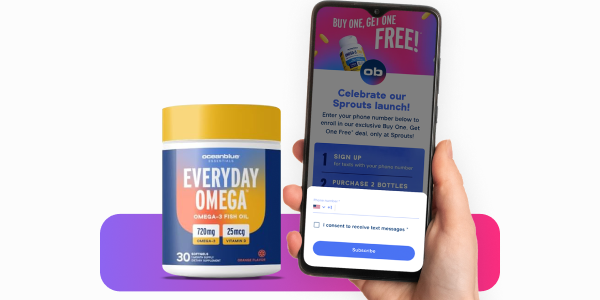
Watch OceanBlue Omega + Digiphy In-Store Customer JourneyHow can a brand capture shopper data on Black Friday promotions?
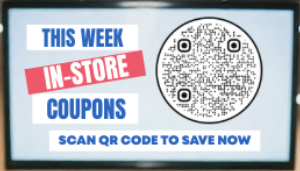
Add a brand-owned step between the shopper and the discount: an opt-in form to claim an offer for an ad or social post, or a QR code on a shelf-talker, end cap or package, that lets shoppers claim money back, sign up for an offer or enter a giveaway.
The strongest version is a receipt-verified money-back offer:
- The shopper buys your product at any retailer.
- They upload the receipt.
- You pay them back directly through Venmo or PayPal.
Every claim comes with a receipt, so every record is a confirmed purchase, and you see the retailer, the location, the basket items, and a phone number or email you can use to reach the customer again. The offer works the same at any retailer. Unlike a traditional trade promotion, the retailer never has to be paid back and does not sit between you and the customer.
Native Pet ran a receipt-verified rebate at Target. Sales velocity roughly doubled, they built tens of thousands of customer profiles in their own CRM, and they expanded nationwide at Target because of the program.

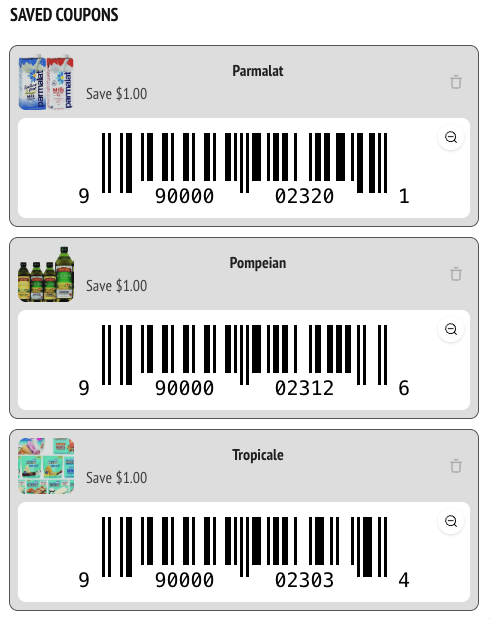
A brand-owned coupon page is a second option. The shopper claims an offer on your page and shares a contact, and the record can flow directly into your CRM, if you're prioritizing capturing customer data. The differences is that a digital coupon is redeemed at the register, so the retailer must accept it at checkout. This requires that you confirm with each retailer the offer, and run it through a retail approved program so the coupon can be scanned at the register. We can add the barcode to a Digiphy page so it can be saved and read at the register, but the retailer controls the mechanism to redeem.
What should a brand do with the data in December?
Three things, in this order:
- Score the promotion on the five questions. Not on revenue. Report new versus returning buyers, offer and retailer performance, and the cost per known customer.
- Talk to the buyers while the purchase is fresh. Text or email them. Send a survey about the purchase, or share a new offer or giveaway. Someone who bought on a deal is the most likely person to drift, and a well-timed message with a reason to buy again in January is where Black Friday turns into repeat revenue.
- Reset next year's trade spend. Allocate a percentage of your trade budget to money-back offers to boost trial and sales, and to build direct customer relationships outside retailers.
The bottom line.
The retailer reports revenue. A money-back offer reports people: a named buyer, the receipt, the location, and a way to reach them again, on every claimed sale.
If you are running a Black Friday promotion, decide now how you will answer the five questions. Digiphy turns a QR code on your package, shelf or ad into a receipt-verified money-back offer that captures the receipt, the buyer and the location, and gives you a direct line to them afterward.
Frequently asked questions.
How do you measure whether a Black Friday promotion was successful?
Look past revenue. Track who bought, whether they were new, whether they would have bought without the discount, which retailer and offer drove it, and whether those buyers purchased again.
What is incremental sales lift?
The portion of sales that would not have happened without the promotion. Kantar and Binet found that only about 22 of every 50 extra units in a typical promotion are incremental.
Can a CPG brand get a shopper data from a retailer-run promotion?
Usually not at the individual level. Retailers keep the shopper record. A brand-owned coupon page or receipt-verified rebate lets the brand capture it directly.
Does the retailer have to be involved in a money-back offer?
No. The shopper buys at any retailer, uploads a receipt, and the brand pays them back directly via PayPal and Venmo. The retailer is not paid back and does not need to share data or run through the offer.
How early should a brand set up Black Friday measurement?
Before the promotion starts. Data captured at the moment of the purchase cannot be recreated afterward.

See What Digiphy can do for your Business
We have a suite of tools to help you leverage the physical touchpoints you have with your customers. Interested to learn more?
Book a Demo